


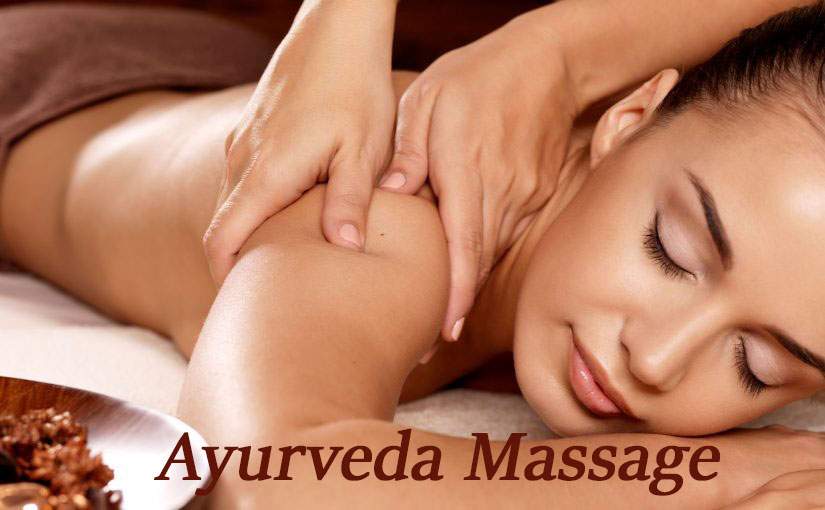
Required material for Ayurveda massage:
1.Medicated oil
2.Heating pan for heating the oil
3. A piece of cloth
4.Table
BEFORE THE START OF AYURVEDA MASSAGE
(1) Massage should be done in a comfortable environment. Choose a warm, peaceful room with dim lights, with light music at the background.
(2) Person who takes massage to be made to lie down on a table whose height does not strain the back of the massager
RULES FOR MASSAGER
1. One who gives massage should be absolutely relaxed.
2. Massager should keep the back straight throughout massage.
3. Massager should never stay in one position for long to avoid gravitational pull.
4. Should wear loose fitting, washable clothes, flat shoes, or go barefoot.
5. Massager should use the weight of the body to give rhythm and depth of massage.
6. Hands and wrists of the massager should be flexible and warm.
TIPS FOR A GOOD MASSAGE
1. Most important element of massage is rhythm.
2. Massage should be pleasurable constantly keep inquiring to find out any of the movements that is painful or unpleasant.
3. Mould your hands to the cantor of the body.
4. One hand should be always in contact with the body of the person who takes massage throughout.
5. Vary the pressure as per the need of the person.
6. Concentration on massage is important should not talk unnecessarily while massaging.
7. A massager should be totally relaxed while massaging.
8. One should not worry if movements seen inappropriate with continuation the rhythm develops.
Procedure
The procedure can be divided into three parts. It includes
1.Pre-massage procedure
2.Massage procedure
3.Post-massage procedure
1.Pre-massage procedure:
1.Ask the person to evacuate urine and stool before coming to massage bed.
2.Ask the patient to remove clothes and ornament.
3.Explain the patient about the procedure.
2. Main Ayurveda Massage procedure:
The procedure of massage is done mainly in seven postures.
1.Sitting in straight leg posture(both legs extended). In this patient massage is done on head , shoulder, arms and legs.
2.Lying on the back(supine posture): In this position massage is done on face, chest, abdomen, groin and legs.
3.Left lateral posture: In this position massage is done on right ear, right hand, right leg.
4.Prone posture(lying on front side): In this position massage is done to neck, back, buttock, back of thigh and fore legs.
5.Right lateral posture: In this posture massage is done on left ear, left arm.etc.
6.Lying on the back(supine posture): In this position massage is done on face, chest, abdomen, groin and legs.(same as posture 2)
7.Sitting in straight leg posture(both legs extended):In this patient massage is done on head , shoulder, arms and legs.(same as posture 1)
Duration of each posture:2-5 minutes for each posture.
As a daily routine(exercise), it is done for 2 minute for each posture.
For therapeutic procedure, it should be done 5 minutes for each posture.
The duration of massage may differ from health condition, age and severity of disease.
Method
Start the movement from shoulder joint. The downward movement of fingers should be done with the fingers on arm, then round movement should bo done on elbow.
Note:
•In abdomen , round movement should be done.
•Rotation type of massage should be done with the help of palm to joints.
•Downward movement with fingers should be done to other parts of body.
•Some patients cannot sit due to paralysis, in such patients massage is done in lying positon.
3.Post-massage procedure:
1.Send the patient for other procedures like swedan if he wants to have them.
2.Allow the patient to rest for some time.
3.Ask him to bath after half hour with luke warm water.
4.Donot expose him directly in air or sun after massage.
Time Duration For Ayurveda Massage:
Age Time
6 days-6 months-15 minutes
Infants (until 3 yrs.) –15 – 20 minutes
3 – 18 years -30 – 45 minutes
18 – 40 years –40 – 45 minutes
40 + years- according to health
People with diseases –15 – 20 minutes
Ayurveda Massage time:
Daily abhyanga is done 1 to 2 hours after eating, preferably yoga or exercise (until persons break a sweat) is practiced after abhyanga. It is best to wait at least half hour after abhyanga before taking a bath to let the oil nourish and detoxify all the tissue layers. The oil also keeps the body and skin flexible. Oil is applied at room temperature in the summer and warmed in the winter. Herbal decoctions and essential oils, according to one’s dosha, may be added to the oils.


